[0:00] Welcome & Introduction
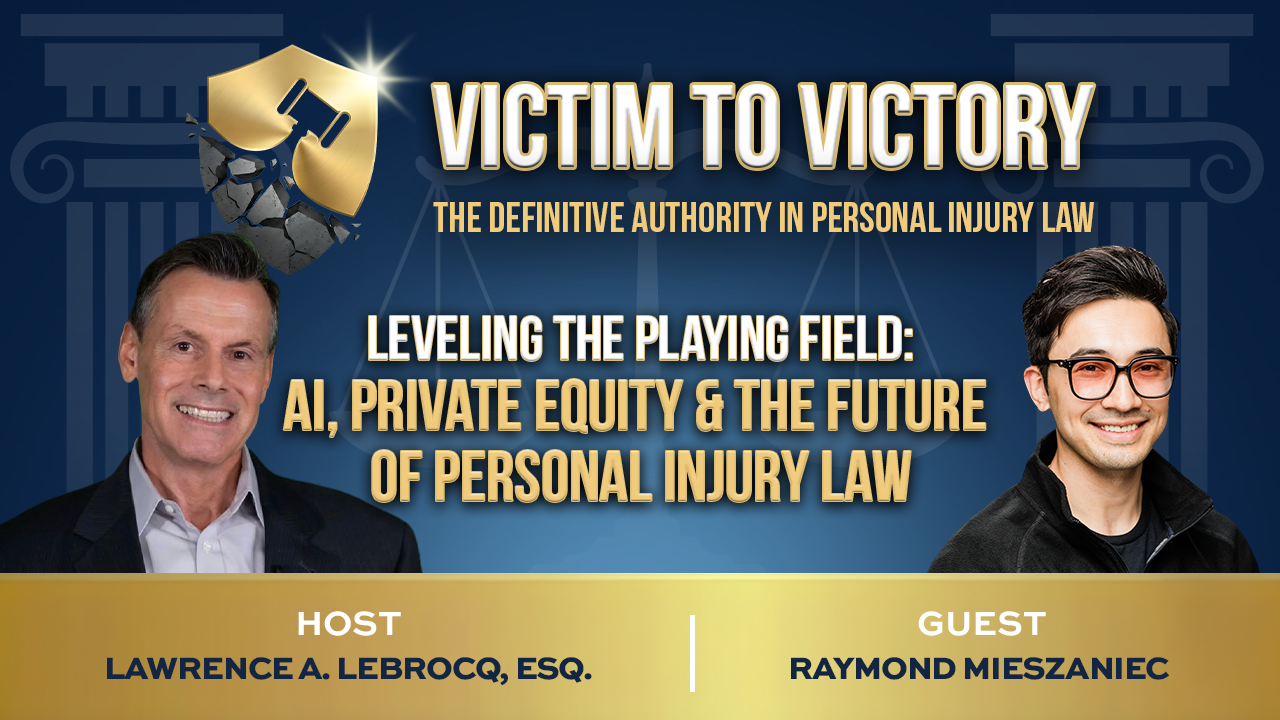
Lawrence LeBrocq opens the show and introduces Raymond Mieszaniec, owner and leader of EvenUp, the fastest-growing AI company in the personal injury legal space, now valued at $2 billion. Lawrence previews the episode’s focus on EvenUp’s newest offering: the PLAAS system.
[0:43] What Is EvenUp? The Elevator Pitch
Raymond gives a crisp overview of EvenUp: a San Francisco-based tech company founded in December 2019, now the leader in AI-powered personal injury workflows, from demand generation to proactive case insights that help attorneys maximize claim value from intake to resolution.
[2:08] From Kung Fu to PricewaterhouseCoopers to PI Tech
Lawrence digs into Raymond’s background. Raymond shares his journey from Vancouver, a mathematics and economics degree, cybersecurity consulting at PwC in Hong Kong, his first company in education and recruitment, and how it all led him to San Francisco and eventually to founding EvenUp.
[5:22] The Origin Story: Raymond’s Father’s Accident
The personal reason behind EvenUp. Raymond recounts how, over 20 years ago, his father was struck by a fleeing gunman’s vehicle during a high-speed police chase, leaving him permanently disabled. His immigrant parents, not knowing how the legal system worked, were worn down by insurance delay tactics and settled for far less than they deserved.
[7:27] Closing the Gap: What the Defense Had That Plaintiffs Didn’t
Raymond explains the lightbulb moment: defense carriers had massive data repositories like Colossus to lowball plaintiffs. Plaintiff attorneys had nothing comparable. That asymmetry became the founding thesis of EvenUp.
[8:28] Introducing PLAAS: Pre-Litigation as a Service
Lawrence asks Raymond to explain PLAAS. Raymond breaks down how EvenUp moved beyond technology alone to solve the people problem, providing top-tier, dedicated case managers and paralegals who are fully trained on EvenUp’s AI tools and serve as a seamless extension of a law firm’s team, from intake through settlement.
[12:27] How PLAAS Is Staffed & Priced
A practical look at the PLAAS model: cost-per-case pricing, dedicated staff (no shared representatives), and a cap of 85 cases per person to ensure quality. Raymond explains how this compares to the hidden costs and unpredictability of traditional in-house hiring.
[14:52] Time on Desk & Real Results
Lawrence asks about case timelines. Raymond shares that PLAAS is resolving cases an average of three months faster than the law firms they serve did previously, reducing time on desk, improving cash flow, and freeing attorneys to focus on higher-value litigation cases.
[16:01] AI Playbooks: The Second Line of Defense
Raymond explains how EvenUp’s AI continuously monitors case files, call transcripts, and documents, flagging TBI indicators, commercial policies, and case-grading signals that a human reviewer might miss. Lawrence explains his own firm’s gold/silver/bronze/platinum/diamond case grading system.
[19:17] Does PLAAS Monitor Intake Calls Too?
Lawrence asks whether EvenUp’s AI can catch missed details at the intake stage. Raymond explains how telephony integrations like Zoom allow the AI to crawl call transcripts and identify patterns, including injury flags, that weren’t captured in the case management system.
[22:11] MSOs & Private Equity: What’s Coming for PI Law Firms
Lawrence pivots to the MSO trend. Raymond recalls predicting 18 months ago that private equity would enter the PI space, and they’re already here. He argues this isn’t doomsday: firms that modernize their operations faster than PE can learn personal injury will win.
[23:13] The Optimist’s Take: Why It’s Still Anybody’s Game
Raymond encourages firms to operate with urgency, not fear. He outlines how technology and AI can give plaintiff firms the same efficiency advantages that private equity brings, and why the opportunity to scale high-quality PI practices has never been greater.
[25:56] Private Equity as an Unlikely Ally Against Tort Reform
An unexpected angle: Raymond argues that PE money flowing into the plaintiff bar could actually help combat insurance-company-funded tort reform lobbying. With capital now on both sides, the fight for consumers’ rights may become more balanced.
[27:27] The Uber Fight & the Contingency Fee System
Lawrence and Raymond discuss the current battle over Uber’s push to cap attorney fees and medical expense recovery. Raymond explains why the contingency fee system is the only gateway most injury victims have to justice, and what happens to consumers if it’s dismantled.
[29:48] Raymond’s Family & Why This Fight Is Personal
A powerful moment: Raymond shares a vivid memory of his family sitting on his childhood bed, crying because they couldn’t afford dinner after his father’s accident. It’s a reminder of exactly who the contingency fee system protects, and why EvenUp exists.
[32:00] EvenUp’s Growth: From 3 People to 700 Employees
Raymond reflects on being told by VCs that EvenUp was “the dumbest idea in the world,” and how the attorneys they serve were the ones who believed in them first. Now at 700 employees and backed by the firms they support, EvenUp has donated over $500K to fight harmful tort reform.
[32:33] The Future of EvenUp: What’s Coming Next
Lawrence asks where EvenUp is headed. Raymond teases significant new developments being built in stealth, consistent with their pattern of shipping only after they’ve proven ROI. He promises to return to the show when announcements are ready.
[35:03] How to Reach EvenUp & Raymond Mieszaniec
raymond@evenuplaw.com | www.evenuplaw.com | Instagram: @Mieszaniec. Raymond walks through the firm’s full product and service overview available on the website, including customer case studies.
[36:15] Closing Thoughts: No Excuses, Build the Firm
Raymond’s final message to attorneys watching: there has never been a better time to build a personal injury practice. The technology, the people, and the services exist right now to help any firm scale with quality. “Every case treated like your best case.”
[38:00] Outro
Lawrence closes with praise for Raymond and EvenUp’s mission, helping plaintiff attorneys and consumers fight back against billion-dollar insurance companies.